November 2025 Apex Insider
Hello there, all budding Salesforce Devs! November brings some big news from Salesforce that's getting people talking about the future of development.
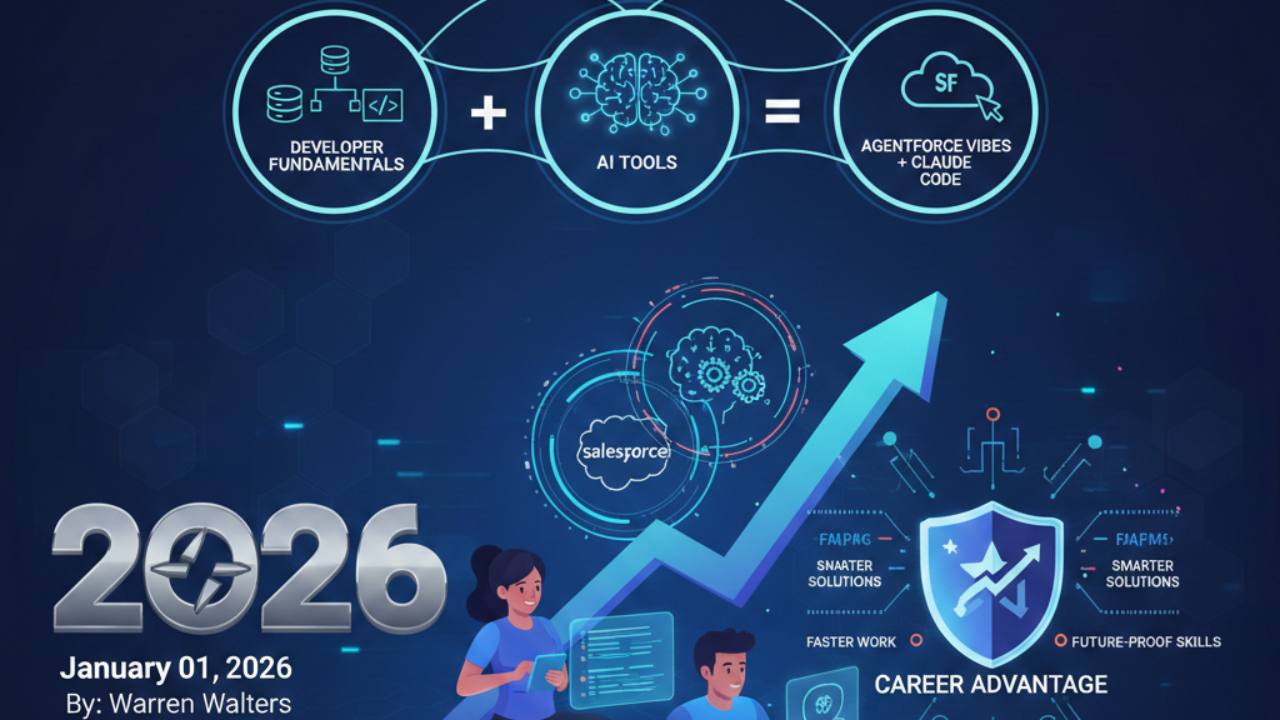
Agentforce Vibes: When Vibe Coding Meets Enterprise Salesforce
Salesforce just launched Agentforce Vibes. It's their version of vibe coding. That means you use plain English to tell it what you want, and it generates code that's ready to use. If you've been following AI coding assistants like GitHub Copilot or Cursor, this might sound familiar. But here's what makes this different for Salesforce developers. It has enterprise security and governance built right into the platform.
The best part? This isn't just another AI tool. It's made specifically for the Salesforce ecosystem. That means it already understands your org structure, your data model, and your coding patterns. It works right out of the box.
What Is Agentforce Vibes?
Agentforce Vibes is Salesforce's AI coding assistant. It has "Vibe Codey" as your coding partner. Instead of writing code line by line, you tell it what you want in plain English. Then the AI creates Apex, JavaScript, HTML, CSS, and even Lightning Web Components for you.
Think of it like building a Flow, but for code. You explain what you need, and the system figures out how to make it happen.
Here's what makes it different from other AI coding tools:
Salesforce-Specific Intelligence: Most AI assistants are trained on random internet code. Agentforce Vibes was trained specifically on Salesforce coding patterns. It knows your data model. It understands your object relationships. It creates code that follows Salesforce best practices.
Enterprise Security: Your code and data never leave Salesforce. For companies that can't use regular AI tools because of security rules, this is huge. Everything stays inside your Salesforce org's security zone.
Built-in Quality Checks: The platform creates tests automatically. It works with Code Analyzer to scan for security issues. You can roll back changes if something goes wrong. It's not just writing code. It's helping you keep things at production quality.
Natural Language DevOps: You can deploy code, create sandboxes, and manage your workflow by just talking to it. No need to memorize complicated command line syntax.
What Can You Actually Build With It?
According to Salesforce's documentation, Agentforce Vibes works great for several things:
- Quick prototypes: Need to show a concept fast? Tell it what you want and let Vibe Codey build a working prototype.
- New projects: Starting something from scratch? The AI can build the whole structure for you based on what you need.
- Lightning Web Components: Building UI parts becomes easier. Just describe the experience you want, and you'll get the HTML, JavaScript, and CSS.
- Improving code: Want to make existing code better? Just tell it what you want to change in plain English.
- Understanding code: Stuck trying to figure out someone else's code? Ask the AI to explain what it does.
The platform works with more than 20 Model Context Protocol tools. It works in VS Code and other compatible editors, including Cursor and MuleSoft's Anypoint Code Builder.
What Does This Mean for Developers?
Here's what's happening. Salesforce is saying Agentforce Vibes helps developers of any skill level build complex applications. At the same time, reports show things are changing in the Salesforce world. Admin and consulting jobs are growing. Traditional developer roles are changing too.
So should new developers learn traditional coding first, or jump straight to vibe coding?
Here's the truth: Understanding code matters more than ever, even when AI writes it.
Agentforce Vibes can create code for you. But it can't figure out if that code solves the right business problem. It can't design a solution that works across multiple systems. And it can't fix complex problems when the code it creates doesn't work well with your existing code.
The developers who will do well with AI coding assistants are those who understand:
- What the code is actually doing (not just that it works)
- How to break down business problems into steps that make sense
- When to use code versus declarative tools like Flow
- How to review and improve code that AI creates
- How systems connect and work together
These are all skills you learn by coding the traditional way first.
When Should You Use Agentforce Vibes?
Based on what we know so far, vibe coding works well for:
- Quick experiments: Testing ideas fast without worrying about syntax
- Repetitive code: Letting AI handle code patterns you use over and over
- Learning by example: Seeing how ideas turn into working code
- Brand new projects: Starting something fresh without old code getting in the way
But traditional coding is still better for:
- Complex business logic: When you need to control every single step
- Making things faster: Understanding exactly what's happening behind the scenes
- Learning the basics: Building the thinking patterns that make you good at coding
- Fixing problems: Tracking down bugs requires really understanding the code
What This Means for Your Learning Path
If you're learning Salesforce development right now, here's how to get ready:
-
Learn the basics first. Understand variables, data types, loops, conditionals, and object-oriented programming. These ideas don't change whether you write code yourself or use AI.
-
Build your thinking patterns. Work through problems the hard way at first. That way you'll understand what's happening when AI creates similar solutions.
-
Try AI tools. Once you know the basics, use tools like Agentforce Vibes to speed up your work. But always check and understand what they create.
-
Focus on solving problems. The most important skill isn't memorizing syntax. It's turning business needs into solutions that make sense. AI can help you build things, but you need to decide what to build.
The future will probably be a mix. Developers who really understand code and use AI tools smartly will be the most successful. Those who only rely on AI without understanding the basics will struggle when things break. And in software development, things always break eventually.
How to Prepare
While we wait for more details about pricing and access, here's how you can get ready:
- Learn the fundamentals through courses like Cloud Code Academy's Developer Kickstart
- Learn to read and understand code, even if you didn't write it
- Practice explaining code in plain language (this helps you check if AI-generated code is good)
- Understand how Salesforce is built and how different systems connect
- Build your problem-solving skills through coding challenges like Lightning Challenges
Agentforce Vibes is an exciting new way to build on the Salesforce platform. The developers who succeed will be those who use it to get more done, not those who use it instead of understanding how code works.
Whether you start using vibe coding right away or keep learning traditional coding first, the key is understanding what the code does, not just that it works.
Cloud Coder Wins in October 2025
Our Cloud Code Academy community continues to achieve amazing milestones:
- Katende S. Kinene passed the Platform Developer I certification exam.
Congratulations to everyone who reached a milestone in October! Your hard work and persistence inspire the entire community!
⚡ Level Up Your Skills with Lightning Challenges
Want to get better at Apex with daily practice? Check out Lightning Challenges. It now has DML challenges to help you master working with data in Salesforce!
📚 Flow to Code: More Important Than Ever
Understanding what code does is super important when AI is writing it. Our Flow to Code course helps you turn Flow concepts into code. This makes the switch easier and more natural. It's a skill that's getting more valuable all the time.

Responses